PLUTO system
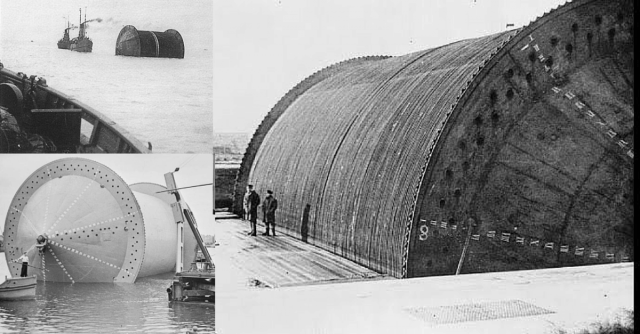
Operation PLUTO (Pipeline Under The Ocean) was a British Second World War operation to construct a submarine pipeline across the English Channel, between Britain and France, in order to supply fuel to the Allied front opened by the Normandy Landings of 6 June 1944. Led by British scientists, petroleum companies and Combined Operations, with the help of the Petroleum Warfare Department, the project was developed by A.C. Hartley, chief engineer with the AIOC (the Anglo-Iranian Oil Company, better known today as British Petroleum). The Allied forces on the continent required an enormous quantity of fuel: for example, an American armoured division on the move might consume 20,677 gallons (94,000 litres) of fuel a day. The pipelines were necessary to reduce dependence on tankers, which could be delayed by adverse weather conditions, problems with discharging due to lack of port facilities, and U-boat attacks. Tankers might also be better utilised in the Pacific Theatre.
Two types of pipeline exist to transport fuel under the English Channel: the HAIS system and the HAMEL, the difference lying in the flexibility of the pipes. The object on display at the museum is of the HAIS type (Hartley Anglo Iranian Siemens), with a hardened lead inner tube approximately 7cm in diameter and a weight of around 30 tonnes per kilometer of deployed tube. The first installation between Great Britain and France took place on August 12, 1944. The installation runs from the Isle of Wight to Cherbourg, a distance of 130 kilometers. The first liters of fuel passing through the system did not arrive until September 22. As the fighting moved away from Normandy, new lines were installed in northern France. In all, 17 pipelines were installed between Dungeness in England and Ambleteuse in the Pas-de-Calais. These systems were dismantled in the late ’40s, but some remains still lie at the bottom of the English Channel.